
Manitoba can’t afford PC’s ideological tax cut
Advertisement
Read this article for free:
or
Already have an account? Log in here »
We need your support!
Local journalism needs your support!
As we navigate through unprecedented times, our journalists are working harder than ever to bring you the latest local updates to keep you safe and informed.
Now, more than ever, we need your support.
Starting at $15.99 plus taxes every four weeks you can access your Brandon Sun online and full access to all content as it appears on our website.
Subscribe Nowor call circulation directly at (204) 727-0527.
Your pledge helps to ensure we provide the news that matters most to your community!
To continue reading, please subscribe:
Add Brandon Sun access to your Free Press subscription for only an additional
$1 for the first 4 weeks*
*Your next subscription payment will increase by $1.00 and you will be charged $20.00 plus GST for four weeks. After four weeks, your payment will increase to $24.00 plus GST every four weeks.
Read unlimited articles for free today:
or
Already have an account? Log in here »
The Manitoba Conservatives’ proposal to nearly double the basic personal exemption on income tax to $30,000 from $15,780 shows they haven’t learned the lessons from their last time in government: radical tax cuts drive up deficits, weaken public services like health care, and mainly benefit those with higher incomes.
The basic personal amount is the amount of income a resident can earn before paying Manitoba provincial income tax. Because everyone claims it, increasing it gives tax cuts to the richest households too, meaning a lot of public money goes to people who don’t need it instead of being targeted to those who do.
Don’t believe the hype: this tax cut would not “trickle down” to everyone else. Much of the additional income would likely be saved in global investments or spent outside the province. By contrast, money spent through government programs has larger economic multipliers because it creates jobs needed to build infrastructure, supports health care and education, and is spent by local workers who spend their earnings in their communities. Public investment grows the economy from the bottom up.
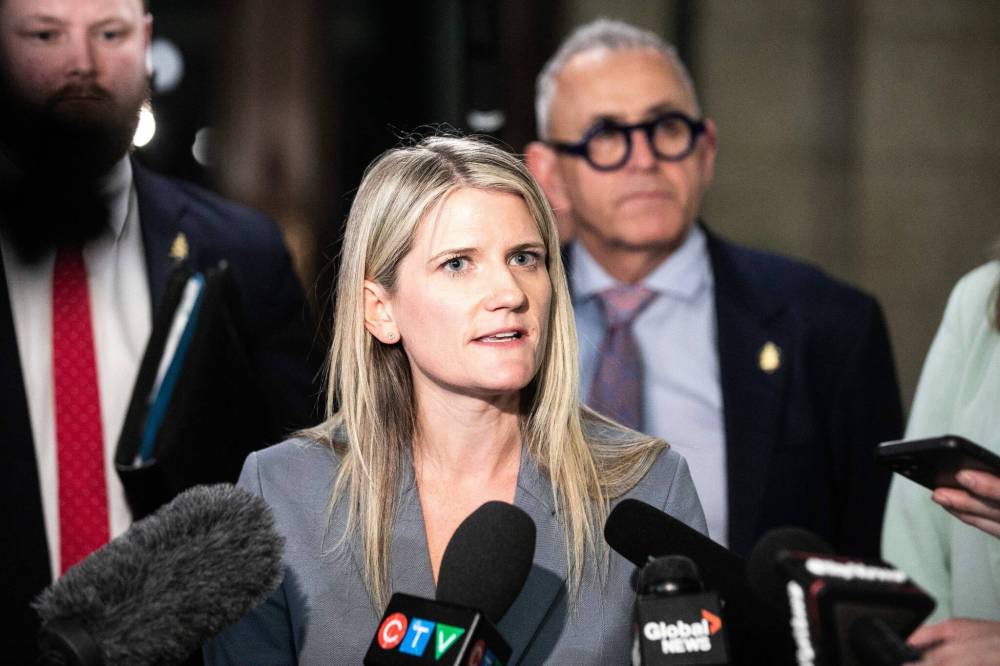
Manitoba Progressive Conservative finance critic Lauren Stone proposed nearly doubling the current basic personal income tax exemption to $30,000. (Mikaela MacKenzie/Winnipeg Free Press files)
Every dollar spent on a broad tax cut like this is a dollar not available to reduce poverty, expand licensed childcare, build social housing, or strengthen public education and health care.
Radically reducing income tax for most filers through a higher exemption is a regressive change that would primarily benefit middle- and upper-income earners while doing little for moderate- and lower-income Manitobans. The lowest 30 per cent of income tax filers and many people below the poverty line would get nothing, because they already have enough credits to offset the income tax they owe. Only those earning above the top of the first tax bracket — about $47,000 — would see meaningful savings.
This proposal would cost the provincial treasury an estimated $1.1 billion in 2026, according to Statistics Canada’s SPSDM tax modelling software done by the Canadian Centre for Policy Alternatives. A tax cut of this magnitude would either balloon the provincial deficit or require deep cuts to public services, such as health care, at a time when the system is still recovering from the last round of austerity.
It appears that lessons have not been learned from the last time the basic personal amount was dramatically increased. During their previous time in power, the Manitoba Conservatives raised the exemption from $10,145 to $15,000 in a single fiscal year — one of the largest tax cuts for upper-income Manitobans in recent history.
Using Statistics Canada’s SPSDM software, CCPA Manitoba found that the top 10 per cent of earners received an average tax savings of $1,322, while the bottom 20 per cent saved only $37.
These tax cuts also worsened inequality between men and women. The top 10 per cent of men in Manitoba received 20 per cent of all income tax reductions — about $110 million. In fact, those men received more tax savings than 60 per cent of all Manitoba women and more than 40 per cent of Manitobans overall.
When the Conservatives left office, the provincial deficit surged by $1.2 billion due in part to extensive tax cuts combined with austerity in health care and other public services. Services were cut or frozen despite population growth, and Manitoba became increasingly reliant on federal transfers.
So why are the Manitoba Conservatives making this policy their first commitment heading toward the 2027 provincial election? It is striking that conservatives want to run government while appearing fundamentally opposed to taxation — the main source of revenue that allows governments to function.
Modern conservative politics is strongly anti-tax. Proposals like this are politically attractive because they promise tax cuts for almost everyone while avoiding the harder conversation about who should pay more to fund the public services we rely on.
But the consequences of this approach are clear. The last round of tax cuts and service reductions left Manitobans with longer health-care wait times, fewer nurses, larger class sizes and underfunded infrastructure.
Perhaps this is the point. Some conservatives believe the government should be starved of revenue to shrink it. As American conservative activist Grover Norquist once put it, the goal is to make government “small enough to drown in the bathtub.” Once public systems are weakened, the door opens to privatization, where those who can afford services get them, and everyone else is left behind.
Manitobans should be clear about what is really being proposed. Doubling the basic personal amount is not a targeted measure to help those struggling with the cost of living. It is a massive and poorly targeted tax cut that would drain more than a billion dollars from the provincial treasury while delivering the largest benefits to those who already earn the most.
At a time when our health-care system is still rebuilding, classrooms are crowded, and thousands of families are waiting for childcare and housing, Manitoba cannot afford another round of ideological tax cuts.
If the goal is to make life more affordable and reduce inequality, the solution is not broad tax cuts that mostly benefit higher earners. The solution is targeted support that lifts people out of poverty, investments in public services, and policies that strengthen the foundations of shared prosperity.
Manitobans have already seen what happens when governments prioritize tax cuts over public investment. We should not repeat the same costly mistake again.
» Molly McCracken is the Manitoba director of the Canadian Centre for Policy Alternatives.