
Chernobyl disaster’s legacy resonates four decades later
Advertisement
Read this article for free:
or
Already have an account? Log in here »
We need your support!
Local journalism needs your support!
As we navigate through unprecedented times, our journalists are working harder than ever to bring you the latest local updates to keep you safe and informed.
Now, more than ever, we need your support.
Starting at $15.99 plus taxes every four weeks you can access your Brandon Sun online and full access to all content as it appears on our website.
Subscribe Nowor call circulation directly at (204) 727-0527.
Your pledge helps to ensure we provide the news that matters most to your community!
To continue reading, please subscribe:
Add Brandon Sun access to your Free Press subscription for only an additional
$1 for the first 4 weeks*
- Enjoy unlimited reading on brandonsun.com
- Read the Brandon Sun E-Edition, our digital replica newspaper
*Your next Free Press subscription payment will increase by $1.00 and you will be charged $20.95 plus GST for four weeks. After four weeks, your payment will increase to $24.95 plus GST every four weeks.
Read unlimited articles for free today:
or
Already have an account? Log in here »
The explosion at the fourth reactor of the Chernobyl nuclear power plant in northern Ukraine on April 26, 1986, changed the lives of thousands of Soviet citizens.
The plant was located 20 kilometres from of the Belarus border, near the confluence of the Uzh and Prypiat rivers and the Kyiv Reservoir. The area was remote, with scattered farms across a rural landscape.
Wind and rainfall dispersed the radiation to the north and northwest. The authorities evacuated the city of Prypiat, three kilometres to the north where 55,000 workers lived, 40 hours after the accident.
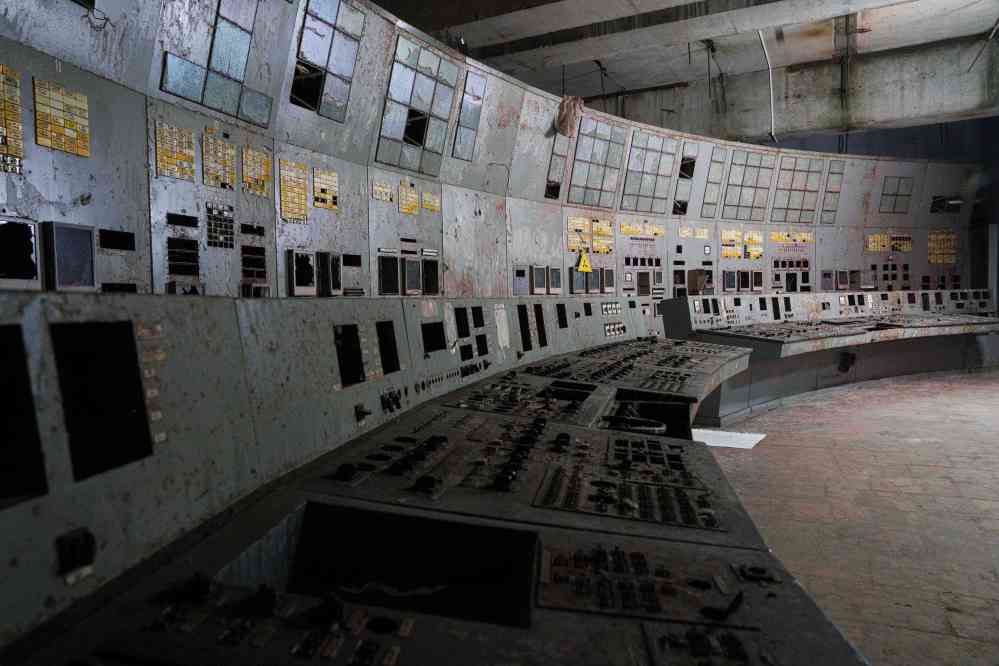
More than 70 officials in the Soviet Union’s ruling Communist Party fled the plant. Two operators were killed instantly, while 28 firemen and first-aid workers sent to the site died of radiation sickness within three months.
Mikhail Gorbachev, the general secretary of the party’s central committee, had only been in office for six weeks at the time.
In March, he had appeared before the 27th party congress to announced “new thinking,” with watchwords “glasnost” (openness) and “perestroika” (restructuring). Nonetheless, the Soviet government’s reaction to news of the Chernobyl disaster was to stay silent for 40 hours.
On April 28, Soviet citizens heard that an accident had taken place, two people had died and a government commission had been set up to investigate.
What happened at Chernobyl?
The accident at Chernobyl occurred as a result of a safety experiment to determine power generation during a shutdown. It occurred over a holiday period with neither the plant director nor chief engineer present. To ensure the experiment’s success, operators dismantled seven mechanisms that would have safely shut down the reactor.
The graphite-moderated RBMK reactor, based on control rods, had an innate flaw unknown to the operators. It became unstable if operated at low power. When an operator lowered the power, it caused a surge that blew the roof off the reactor, spreading graphite from the core and creating a radiation cloud.
In early May, Gorbachev appeared on television but used the time to denounce “sensational” reports about mass casualties.
Members of the public in the main fallout areas of Ukraine and Belarus were desperate for information. Some 600,000 “liquidators” had the task of removing contaminated topsoil. Coal miners from the Russia and the Donbas region in eastern Ukraine constructed a shelf below the reactor to prevent it falling to the water table.
It took three years before Soviet authorities published maps detailing where radioactive cesium had fallen. The area covered most of Belarus, large areas of northern and western Ukraine, and part of southern Russia.
Thousands of liquidators died between 1986 and 1989, mostly from heart attacks. They were men in their 20s and 30s.
Thyroid cancer developed among children in Belarus by 1990, affecting more than 3,000. Ukraine placed a moratorium on building new reactors by 1990, and Chernobyl itself was shut down by 2000 with a roof (sarkofag or sarcophagus) over the damaged reactor.
Public reaction
As the scale of the disaster became clearer, anger and disillusionment grew among the population. In particular, many questioned why all the energy industries were under Moscow’s control, in ministries that had little knowledge of the local area.
In a way, Chernobyl created glasnost. Journalists wrote critiques of scientists supervising the accident’s aftermath and about the health consequences. The casualty rates far exceeded the totals publicized by the World Health Organization.
In November 1988, anti-nuclear power protests took place in Kyiv under the slogan “The Environment and Us.” Dr. Yuriy Shcherbak (later Ukraine’s ambassador to Canada) formed the Green World Association, which later became the Green Party of Ukraine. A popular movement called Rukh was founded in 1989 and focused on Ukrainian sovereignty, language and telling the truth about Chernobyl.
Both Ukraine and Belarus, however, were slow to accept political change. Party leaders did little to help overcome the aftermath of Chernobyl. A notable rift was evident in both societies between the scientific and party elite on the one hand, and activists, journalists and the general public on the other.
The aftermath of Chernobyl
In August 1986, a Soviet team arrived in Vienna to explain the causes of the accident to the International Atomic Energy Agency. Led by Soviet chemist Valery Legasov, it blamed the accident entirely on human error, ignoring more than 30 known flaws in the RBMK reactor.
On the eve of the accident’s second anniversary, Legasov committed suicide. He was demoralized by the authorities’ failure to heed his warnings about the safety of the reactor. He was likely also suffering from radiation sickness.
Anti-nuclear sentiment across the Soviet Union halted the vast program to expand atomic energy. Political movements in the Baltic States, Ukraine, Georgia and other republics coalesced, forcing the Soviet leadership to make concessions.
By 1991, Gorbachev limited glasnost and introduced the concept of a revised union of sovereign republics. Chernobyl was not the only factor in such a development, but it was a catalyst.
The plant has long been shut down and decommissioned, but its significance remains. Ukraine still depends on nuclear power for about half its energy needs. The Russian invasion saw a brief occupation of the defunct Chernobyl station and a takeover of Ukraine’s largest nuclear plant at Zaporizhzhia.
We should remember the bravery of those who fought the fire and cleaned the area. We should also remember the courage of ordinary people who defied the authorities in a quest for hard information and societal change. And we should keep the memory of the date, one of significant change in the former Soviet Union.
» David Roger Marples is a professor in Russian and Eastern European history at the University of Alberta. This column was originally published at The Conversation Canada: theconversation.com/ca