Year of climate chaos World of extreme weather hits home for Manitobans
Read this article for free:
or
Already have an account? Log in here »
We need your support!
Local journalism needs your support!
As we navigate through unprecedented times, our journalists are working harder than ever to bring you the latest local updates to keep you safe and informed.
Now, more than ever, we need your support.
Starting at $15.99 plus taxes every four weeks you can access your Brandon Sun online and full access to all content as it appears on our website.
Subscribe Nowor call circulation directly at (204) 727-0527.
Your pledge helps to ensure we provide the news that matters most to your community!
To continue reading, please subscribe:
Add Brandon Sun access to your Free Press subscription for only an additional
$1 for the first 4 weeks*
- Enjoy unlimited reading on brandonsun.com
- Read the Brandon Sun E-Edition, our digital replica newspaper
*Your next Free Press subscription payment will increase by $1.00 and you will be charged $20.95 plus GST for four weeks. After four weeks, your payment will increase to $24.95 plus GST every four weeks.
Read unlimited articles for free today:
or
Already have an account? Log in here »
Hey there, time traveller!
This article was published 29/12/2021 (1726 days ago), so information in it may no longer be current.
Tom Johnson is ending the year much the way he started it: waiting and praying for snow to fall.
“I would sure love to see a little more snow on the ground,” Johnson said prior to Christmas.
“There’s sure not much moisture right now. And the lake — a lot of our pasture and hay land is right beside the lake. And they said this year that this is the lowest the lake has ever been — ever. And I’ve never ever seen it this low.”
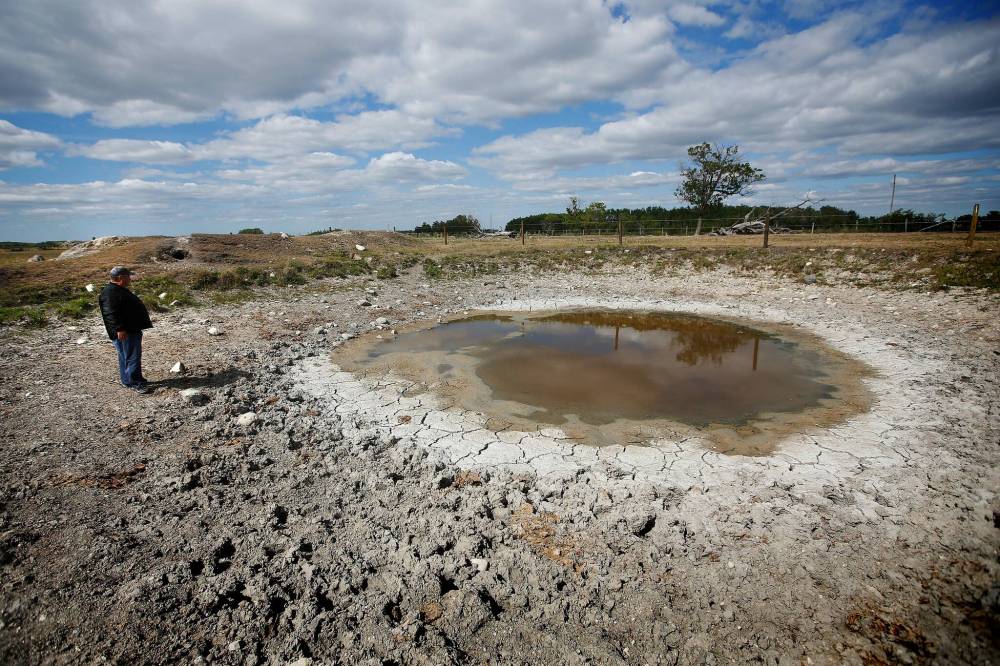
The lake he refers to is Lake Manitoba, which borders his near-century-old cattle farm in Oak Point. From where he stands in his home, he could still see bare patches of pasture midway through the month, and the dugouts beside the road hadn’t filled with snow yet, which — at this point of the year — he called, “very curious.”
“We’ll need some more snow and awful quick.”
Witnessing the direct and immediate impacts of climate change was a hallmark of 2021 in Canada. Whether it manifested itself in heat, drought, fires or, more recently, intense atmospheric rivers and flooding, a world of extremes is upon us.
This summer, Johnson thought he’d lose everything his family had built on the eastern shore of Lake Manitoba. The extreme drought that enveloped the province meant the water sources his cattle regularly relied on had dried up.
For the first time in the farm’s history, Johnson and his son, Cam, drilled wells on their property and hauled water to makeshift troughs they made in the pastures out of old tractor tires. They gave everything they had to keep the farm going; at the end of July, they really didn’t know if it would be enough. The prospect of having to sell off their cattle loomed large.
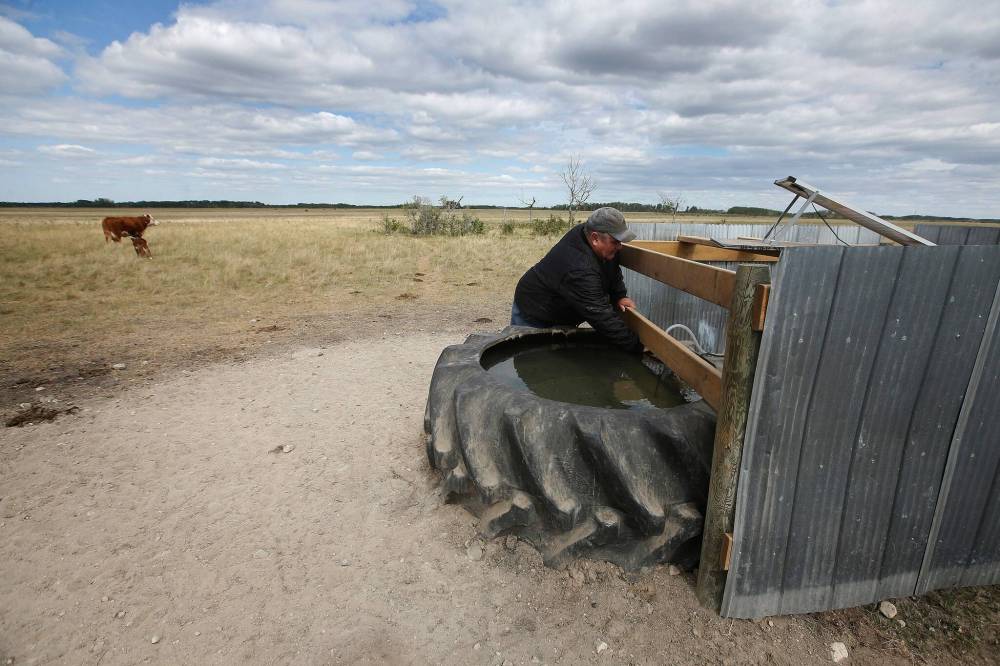
“If my son hadn’t wanted to keep going, I would have just sold everything and packed it in. But he kind of pushed for us to keep going,” Johnson said.
Government support came in the form of subsidies for feed and hay that needed to be purchased because the fields had produced so little. It meant the Johnson family farm would live to fight another day. Johnson sold off the calves early — in the fall instead of the spring — but the rest of the herd remains intact.
Other families in the region weren’t so lucky, Johnson said. “They sold everything. They said, ‘No, that’s enough.’”
Hay and feed across Canada became so scarce and expensive throughout the summer and fall the RCMP warned online scammers were taking advantage of desperate farmers.
This summer’s historic drought didn’t just hit farmers hard.
In forested parts of the province and region, fire came with a vengeance. In July, Dave Schafer, director of the Manitoba Wildfire Service, said it was one of the most challenging firefighting seasons he’d seen in his 40-year career.
Five First Nations along the east side of Lake Winnipeg, with more than 2,000 residents, were evacuated. Fires torched power lines, which meant people from Little Grand Rapids and Pauingassi were virtually held hostage in hotels across Winnipeg for more than 80 days before repatriation flights could bring them home.
The City of Morden, also experiencing extreme drought, applied strict water restrictions in the spring and further increased its stringency as it continues to deal with the threat of water shortages. New water purchasing agreements from neighbouring communities mean residential water prices will increase by nearly 18 per cent starting in March.
This month, polar bears left Churchill in one of the latest freeze-ups of the Hudson Bay in living memory.
“Climate change, absolutely, is raising our temperatures at all times of the year. To date, it’s mostly been in the colder months of the year that we’ve really noticed the warming temperatures, but this year, the summer temperatures were also very high,” said Danny Blair, co-director of the University of Winnipeg’s Prairie Climate Centre.
“And on top of that, we had lower than normal precipitation. And both of those conditions — higher temperatures and lower amounts of precipitation in the summertime — is what we’ve been projecting for a very long time… Into the decades ahead, this is going to become more common, unfortunately.”
Blair called 2021 a “preview” for what Manitoba will experience in the coming decades.
Amid the chaos, the climate story of the year, for Blair, was the astounding heat wave in Western Canada that had Lytton, B.C., reach a record temperature of 49.6 C.
“The heat wave event, for me, was a shocking event,” Blair said. “But the real thing is that it killed more people than any other weather disaster in Canada. It killed almost 700 people. That is 600 people or so in B.C. and 60 or so in Alberta.
“That’s a remarkable and distressing thing to see so many people fall victim to the heat stress that was associated with this remarkable heat wave.”
The death toll from the Western Canadian heat wave draws attention, again, to the fact Manitoba health authorities still do not track the number of heat-related deaths locally.
The last 12 months were also marked by the COP26 conference and the raising of international goals to lower emissions on a global scale, including Canada’s commitments. International agreements made this year have kept the goal of limiting global warming to 1.5 C alive — but just barely.
Further advances in science have improved researchers’ ability to communicate the impact of climate change on specific events. The heat wave in Western Canada, for example, researchers were able to say it would have been impossible for it to have occurred without climate change.
This type of advancement in the science of weather attribution is critical because journalists and other communicators have long-been afraid to draw definitive lines between extreme weather events and climate change. The direct and definitive lines are now becoming possible.
“It’s a really important development because it does help convince people, if that’s the right term, that climate change is making the weather different. So the very complicated science of attribution is contributing to our understanding and awareness that climate change is affecting things,” Blair said.
— special to the Free Press
fpcity@freepress.mb.ca
History
Updated on Wednesday, December 29, 2021 6:24 AM CST: Adds subheadline