
Pros outweigh cons in child vax concerns
Advertisement
Read this article for free:
or
Already have an account? Log in here »
We need your support!
Local journalism needs your support!
As we navigate through unprecedented times, our journalists are working harder than ever to bring you the latest local updates to keep you safe and informed.
Now, more than ever, we need your support.
Starting at $15.99 plus taxes every four weeks you can access your Brandon Sun online and full access to all content as it appears on our website.
Subscribe Nowor call circulation directly at (204) 727-0527.
Your pledge helps to ensure we provide the news that matters most to your community!
To continue reading, please subscribe:
Add Brandon Sun access to your Free Press subscription for only an additional
$1 for the first 4 weeks*
- Enjoy unlimited reading on brandonsun.com
- Read the Brandon Sun E-Edition, our digital replica newspaper
*Your next Free Press subscription payment will increase by $1.00 and you will be charged $20.95 plus GST for four weeks. After four weeks, your payment will increase to $24.95 plus GST every four weeks.
Read unlimited articles for free today:
or
Already have an account? Log in here »
Hey there, time traveller!
This article was published 20/11/2021 (1796 days ago), so information in it may no longer be current.
Whether you are skeptical of polls — like I am — or not, survey data over the course of the last year has shown that a large majority of Canadians have been supportive of Canada’s vaccination efforts and the policies that have sprung up around those efforts.
In March/April of this year, Statistics Canada issued a report based on data collected by the Canadian Community Health Survey on COVID-19 vaccination willingness that suggested 88 per cent of Canadians aged 12 and older were somewhat or very likely to get vaccinated, or had already received at least one dose. That was an increase from data collected in January/February 2021, where favourable responses were at 82 per cent.
Then in August, during the first week of the so-called “pandemic election,” an Ipsos poll reported that a strong majority of Canadians agreed with vaccine mandates — 80 per cent in favour of mandates for federal public servants, and 82 per cent in favour for those flying on an airplane or taking a train. A further 84 per cent supported mandatory vaccinations for health-care workers and 81 per cent for teachers.
By early September, a Leger poll suggested eight out of every 10 Canadians backed the notion of a COVID-19 vaccine passport. That same poll found that 56 per cent of respondents said they “strongly” supported provincial vaccine passports for indoor places like bars, restaurants, gyms, concert halls and festivals, with a further 25 per cent saying they “somewhat” supported the idea.
As the days wore on, Canadians who had been vaccinated began to show mistrust of fellow Canadians who remained unvaccinated, with an ACS-Leger poll for the National Post showing that 69 per cent said they did not trust people who thus far had refused the shot.
And by November, more than 80 per cent of Canadians who responded to a Nanos Research poll conducted for The Globe and Mail said all elected members of Parliament should be vaccinated against COVID-19. Only 11.1 per cent said they disagreed with demanding their MP be vaccinated, and three per cent said they somewhat disagreed with the statement.
For the most part, based on these numbers, it would seem fair to say that a majority of Canadians believe that the need for people over 12 to be vaccinated was necessary in order to end the pandemic and return to some sense of normalcy.
But the same cannot be said for public opinion when it comes down to the vaccination of children, where support is significantly lower.
In October, survey results by pollster Angus Reid said about half of Canadian parents planned to have their elementary school-aged children vaccinated against COVID-19 right away. According to CTV, which reported the results, one in two of the 812 parents who responded said they would have their children vaccinated as soon as Health Canada approves one for the five to 11 age group.
Interestingly enough, Health Canada just approved the first COVID-19 vaccine for children aged five to 11 on Friday, with provinces beginning to offer doses as early as next week.
Pfizer and its partner BioNTech, which had submitted a request for approval of child-sized doses of its mRNA vaccine for COVID-19 on Oct. 18, is the first to receive approval.
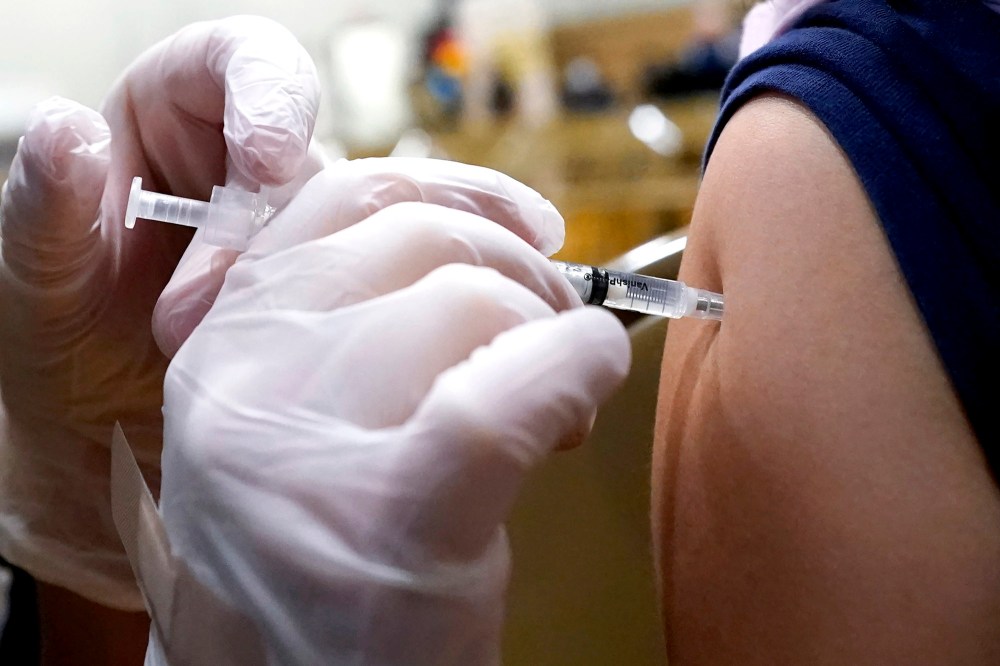
In fact, booking for children’s COVID-19 vaccine appointments starts Monday morning in Manitoba, with the province reporting that the first shots could be going into little arms by the end of the week. According to the province, about 125,000 children will be eligible for vaccination.
The question now before the federal and provincial governments is whether or not to mandate that all school children in elementary and high school get vaccinated before attending classes. Thus far, that has not been the case, with only a few provinces taking that consideration seriously, such as Ontario, which already has such mandates in place for other disease vaccines.
And with support for child vaccines still so shallow among Canadian parents, it’s unlikely that our politicians will feel secure enough to create, let alone enforce, such a mandate. This is in spite of the fact that post-secondary institutions in our province have already implemented such a mandate.
But why are parents so hesitant to allow their children to be vaccinated? There are a number of reasons, including ongoing concerns regarding the efficacy of the vaccines to prevent illness, as well as a prevalent feeling among at least some parents that there is no net benefit for getting kids vaccinated against COVID-19, because they feel kids are at a much lower risk for serious illness.
There have also been some rare incidents of mRNA vaccines that have been linked to cases of myocarditis, which is defined as a swelling of the heart muscle. While those who have developed the complication — mostly under 40 years old — have been fine, there is lingering concern among parents that they’re needlessly putting kids in danger.
These are not baseless fears. As a parent, I cannot say that these concerns and questions have not been on my mind as well. But when I think of all that has been lost to our community’s children over the last two years, and when I see a growing number of children being hit with this virus in our schools here in Brandon School Division and across the province, I have to think that the risk from COVID-19 and this ongoing pandemic is worse.
When it comes to our children, parents are always going to be more cautious than they would be for themselves. This is obviously reflected in the poll results. The provincial and federal governments will have their work cut out convincing already hesitant parents that their children need to be vaccinated too.
Considering the survey data, that may prove a very difficult task.
» Matt Goerzen, editor