
NATIONAL VIEWPOINT: Let’s protect familiar species, too
Advertisement
Read this article for free:
or
Already have an account? Log in here »
We need your support!
Local journalism needs your support!
As we navigate through unprecedented times, our journalists are working harder than ever to bring you the latest local updates to keep you safe and informed.
Now, more than ever, we need your support.
Starting at $15.99 plus taxes every four weeks you can access your Brandon Sun online and full access to all content as it appears on our website.
Subscribe Nowor call circulation directly at (204) 727-0527.
Your pledge helps to ensure we provide the news that matters most to your community!
To continue reading, please subscribe:
Add Brandon Sun access to your Free Press subscription for only an additional
$1 for the first 4 weeks*
- Enjoy unlimited reading on brandonsun.com
- Read the Brandon Sun E-Edition, our digital replica newspaper
*Your next Free Press subscription payment will increase by $1.00 and you will be charged $20.95 plus GST for four weeks. After four weeks, your payment will increase to $24.95 plus GST every four weeks.
Read unlimited articles for free today:
or
Already have an account? Log in here »
Hey there, time traveller!
This article was published 13/02/2023 (1333 days ago), so information in it may no longer be current.
Nothing commands attention like rarity. In the natural world, rarity is most starkly represented by the last members of a declining species. These scarce plants and animals are infinitively valuable; they represent the final hope for averting extinction.
Some of these lone individuals — Sudan, the last male northern white rhinoceros; Martha, the last passenger pigeon and George, the last Hawaiian tree snail of his kind — may even be remembered by name. Extinction is most poignant when it’s personal.
The efforts toward conserving rare species have made an immense difference. In the past few decades, declines of many endangered plants and animals have been reversed. Dozens of unique living forms have been saved from extinction. But a preoccupation with scarcity could come at the expense of overlooking the ordinary.
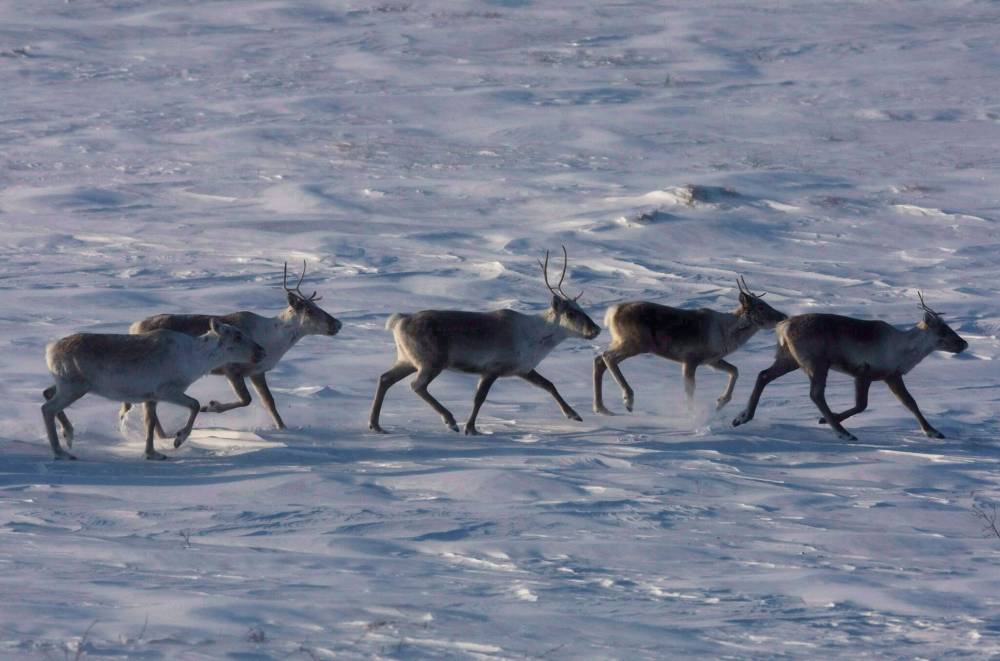
The Dolphin and Union Caribou is an endangered species in Canada. (The Canadian Press)
Commonness is often associated with the bland and mundane, even worthless. It invites complacency. As observed by writer Aldous Huxley, “Most human beings have an absolute and infinite capacity for taking things for granted.” But if we are to conserve nature — and its myriad benefits to people — we must maintain our focus on the familiar.
When nature is taken for granted
In the 19th century, some of the most distinguished minds in biology, Jean Baptiste de Lamarck and Thomas Huxley, deemed extinction at sea impossible, given the reproductive capacity of marine organisms and the impracticality of overfishing.
In my home province of Ontario, early settlers assumed fish and wildlife were inexhaustible. In the early 20th century, the U.S. Bureau of Soils confidently declared that “soil is the one indestructible, immutable asset that the nation possesses. It is the one resource that cannot be exhausted.”
Such notions of limitless nature carry great risk. The lessons have been hard; the upheaval has been ecological and economic. In North America, they include the extinction of the passenger pigeon, which was once the most numerous bird in the world; the decimation of northern cod, which at one time was so thick in numbers that they slowed the passage of ships; the destruction of plains bison, the rapid demise of American chestnut and the decline of eastern white pine.
These species were once regarded as super-abundant, their decline and disappearance inconceivable.
Common species also on decline
Abundance provides only a partial buffer against extinction. Common species, even those in seemingly limitless numbers, are not immune to decimation. Increasingly, conservation is turning its sights in this direction — to safeguard what is common, not just what is rare.
There are good reasons to consider the common. Abundant species can serve as the proverbial canaries in a coal mine. A study of North American birds uncovered that we have lost three billion birds on this continent within the past two generations.
These declines include species once deemed widespread and secure, like the common redpoll, whose numbers are down by 29 million, the common grackle, down by 83 million and the common nighthawk, down by 26 million. The staggering losses are a reminder that the mark of a species in trouble is not rarity, but rate of decline.
Notably, the shifts in abundance of common species can translate into sizable shifts in ecosystem functioning. Birds, despite their diminutive stature, throw their aggregate weight around, owing to the innumerable insects they eat, the flowers they pollinate and the seeds they disperse.
One caribou herd, numbering in the hundreds of thousands, removes millions of kilograms of forage every year and returns nutrients to the soil in the form of millions of kilograms of fecal pellets.
The value of common species is not just ecological and economic, but psychological. Study after study demonstrates that encounters with the natural world improve our mental state. Losing familiar species — whether birds in our backyard or butterflies on our doorstep — is likely to shrink such opportunities for engagement.
Guarding against the extinction of commonness
By their sheer numbers, common species can be a force of nature. Well before the finality of extinction, however, such ecological roles can be diminished.
Rarity will always occupy a prominent place in conservation. But in our quest for a sustainable and biodiverse future, we must avoid “the extinction of commonness.” The ingredients for success are at hand: Monitor nature closely, guard against complacency and invest for the long term.
Protecting common creatures is likely to bring immense benefits — to our environment, our economy and our psyche.
» James Schaefer is a professor of biology at Trent University in Peterborough, Ont. This column was first published at theconversation.com.