
CITIZEN ACTIVE: Podcasts offer a look at new internet gurus
Advertisement
Read this article for free:
or
Already have an account? Log in here »
We need your support!
Local journalism needs your support!
As we navigate through unprecedented times, our journalists are working harder than ever to bring you the latest local updates to keep you safe and informed.
Now, more than ever, we need your support.
Starting at $15.99 plus taxes every four weeks you can access your Brandon Sun online and full access to all content as it appears on our website.
Subscribe Nowor call circulation directly at (204) 727-0527.
Your pledge helps to ensure we provide the news that matters most to your community!
To continue reading, please subscribe:
Add Brandon Sun access to your Free Press subscription for only an additional
$1 for the first 4 weeks*
- Enjoy unlimited reading on brandonsun.com
- Read the Brandon Sun E-Edition, our digital replica newspaper
*Your next Free Press subscription payment will increase by $1.00 and you will be charged $20.95 plus GST for four weeks. After four weeks, your payment will increase to $24.95 plus GST every four weeks.
Read unlimited articles for free today:
or
Already have an account? Log in here »
Hey there, time traveller!
This article was published 06/03/2023 (1172 days ago), so information in it may no longer be current.
You could be as intrigued as I am by the internet proliferation of weird ideas, conspiracy theories and “gurus.” To help me get a better understanding, I have been following two quirky podcasts. They make for fascinating and often fun listening. The podcasts are “Conspirituality” and “Decoding the Gurus.”
What is a guru? It originally meant an Asian religious teacher. Now, it can mean an inspiring expert, coach or mentor. Here, guru means a secular commentator on the internet. Other terms for these charismatic figures include public intellectual, influencer or online personality. Internet gurus have an increasing impact, linked to the decline and mistrust of traditional sources of information and guidance like institutional authorities, governments, the mainstream media, corporations and religions.
Traditional gurus had a dark side. While some were likely good people, many religious gurus abused and exploited their devotees. The internet amplifies this potential danger. Some online gurus can be of benefit to their fans. But others can harm millions of their followers by feeding them falsehoods and fleecing them financially. (Sorry: alliteration temptation!)
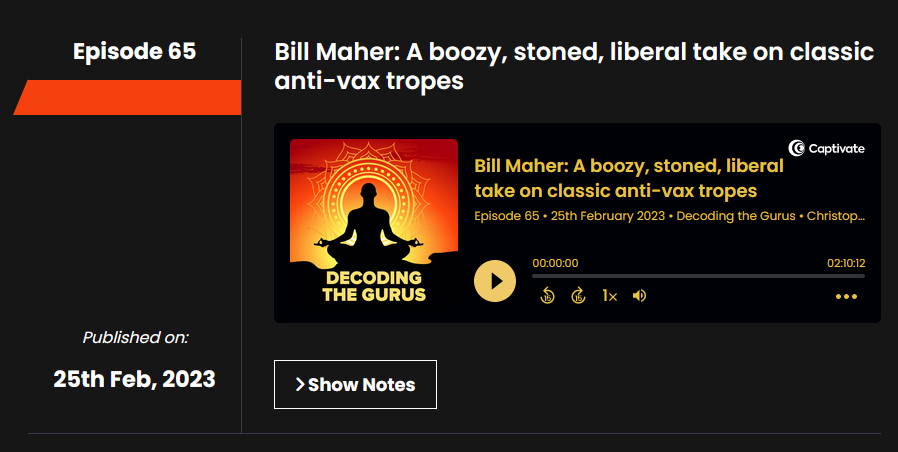
“Decoding the Gurus” is hosted by psychologist Matthew Browne and anthropologist Christopher Kavanagh. Browne is from Australia; Kavanagh is from Northern Ireland, but now lives in Japan. They treat listeners to a refreshing international vibe, plus unusual accents.
The podcast has featured some gurus I have also looked at, either reviewing their books or referring to their ideas. Overlapping gurus include Scott Adams, Rutger Bregman, Jonathan Haidt, Sam Harris, James Lindsay and Jordan Peterson. The hosts mock some gurus while drawing attention to the beneficial impact of others. As well, Browne and Kavanagh interview academics, journalists and others involved in the study of gurus, or as the hosts dub it, “gurology.”
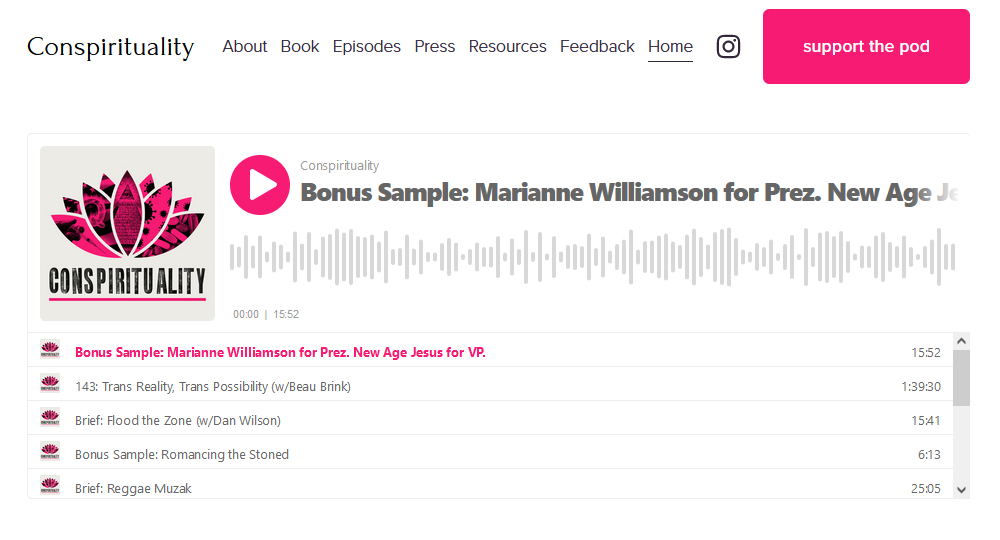
“Conspirituality” covers similar ground, but from a crunchy, left-wing perspective. The hosts are Derek Beres, Matthew Remski and Julian Walker. They are independent researchers, writers and podcasters with backgrounds in practising and teaching yoga and in surviving yoga cults. Their focus is where wellness and spirituality intersect with right-wing conspiracy theories. This is a strange and confusing landscape. But this podcast is touching something significant and I plan to visit this terrain again in the future.
“Decoding the Gurus” and “Conspirituality” began in 2020. The podcasts were responding to a changing social environment created by the pandemic. Trust in institutions among the citizenry was dropping. And the pandemic itself was sparking a growth in disinformation and conspiracy theories.
With a few clicks, the internet connects everything. Some regular folks might have questions about communication from governments and corporations. But those folks can “go down the rabbit hole” and start believing crazy stuff, like Bill Gates is putting chips in vaccines. Or Hillary Clinton and Tom Hanks belong to a secret pedophile cabal. People can become enmeshed in the QAnon cult after a few days of surfing the net “doing their own research.”
Here’s something else. You could discover that a friend or family member has come under the influence of a wicked internet guru. That guru might have millions of followers, but you might never have heard of them.
An example: Andrew Tate. Who? That is what I mean: like many of you, I had never heard of Tate until a couple of months ago when he was arrested in Romania for human trafficking. But Tate has millions of followers online and his vile misogynistic memes have been adopted by multitudes of teenage — and even younger — boys. A recent episode of “Conspirituality” tells the Tate story within an overall analysis.
That the topic of internet gurus is being explored by podcasts is appropriate. Gurus thrive on podcasts, including video versions on YouTube. Podcasts and videos can be intimate and compelling media, enabling gurus to forge deep bonds with their followers.
“Decoding the Gurus” and “Conspirituality” exemplify a feature of podcasts: they are untrammeled by time constraints. Both podcasts have dozens of episodes. And each episode can go on for one, two or three hours. So, for readers who would like a brief introduction to this topic, I recommend a new podcast from the BBC called “The New Gurus.” Mercifully, this podcast has a total of eight 30-minute episodes.
By the way, all these podcasts are free to listen to. They are supported either by advertising or optional donation. Listeners who donate get additional content.
As an avid listener of podcasts and as an enthusiast of the self-help genre, I observe two contradictory trends. One trend is the high quality of information available online to everyone — free of charge. The other trend is the large quantity of conspiracy theories and disinformation that is also online. So I welcome reflection on both the good and the bad of the new internet gurus.