
High-profile cases, verdicts impact sex assault survivors seeking help
Advertisement
Read this article for free:
or
Already have an account? Log in here »
We need your support!
Local journalism needs your support!
As we navigate through unprecedented times, our journalists are working harder than ever to bring you the latest local updates to keep you safe and informed.
Now, more than ever, we need your support.
Starting at $15.99 plus taxes every four weeks you can access your Brandon Sun online and full access to all content as it appears on our website.
Subscribe Nowor call circulation directly at (204) 727-0527.
Your pledge helps to ensure we provide the news that matters most to your community!
To continue reading, please subscribe:
Add Brandon Sun access to your Free Press subscription for only an additional
$1 for the first 4 weeks*
*Your next subscription payment will increase by $1.00 and you will be charged $20.00 plus GST for four weeks. After four weeks, your payment will increase to $24.00 plus GST every four weeks.
Read unlimited articles for free today:
or
Already have an account? Log in here »
Hey there, time traveller!
This article was published 24/07/2025 (246 days ago), so information in it may no longer be current.
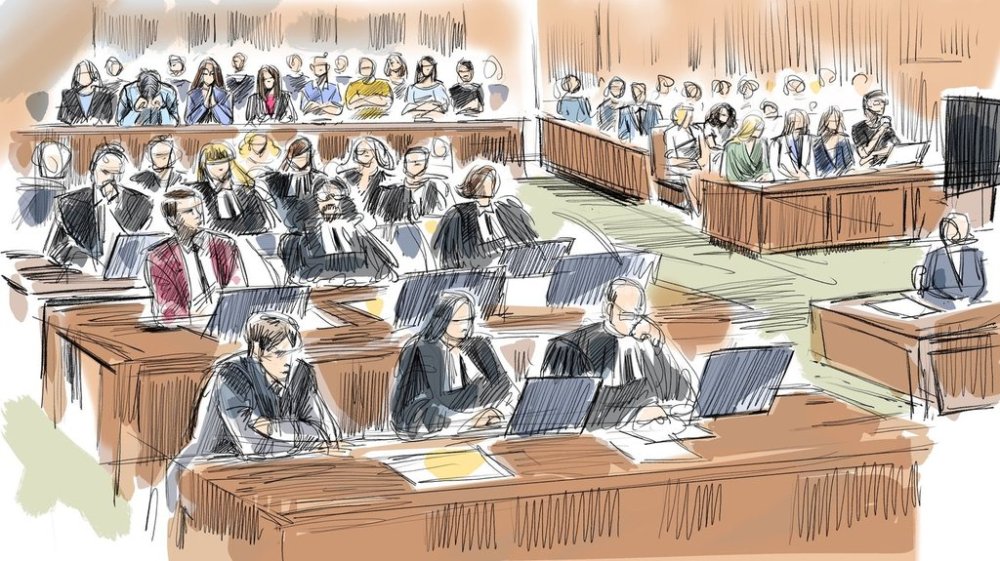
Five former Canada world junior hockey players have been acquitted of sexually assaulting a woman in a hotel room in 2018 after Ontario Superior Court Justice Maria Carroccia said the Crown failed to prove its case and that the victim’s evidence was neither credible nor reliable.
The shocking outcome highlights the inadequacies and harms of the legal system and formal institutions in responding to sexual assault that advocates, researchers and victims/survivors have long pointed to.
If we truly want to address sexual violence, then challenging rape myths — in the courts, in the media and elsewhere — is an essential part of this work.
Sexual violence — a type of gender-based violence — is a persistent problem in Canada and across the globe, with high rates of sexual assault and other forms of sexual violence. Statistics Canada has found that approximately 4.7 million women in Canada have been sexually assaulted since the age of 15. Reporting remains low, however, and victims/survivors face a multitude of barriers to care and justice.
Barriers to reporting and seeking help include factors like service gaps, not knowing where to go for help, inaccessibility and shame and stigma. Attitudes surrounding sexual violence can also impact survivors’ decisions to disclose. They can also influence the responses survivors receive when they reach out for support.
Supportive versus unsupportive reactions
The majority of victims/survivors never report or seek help through formal channels. Instead, they’re more likely to disclose to informal support systems, like friends and family.
When a disclosure of violence is met with a supportive reaction, victim/survivors can experience improved well-being. Positive reactions can also lead to additional help-seeking by affirming the victims/survivors’ need for care, and offering information about services and resources.
In contrast, unsupportive responses can hinder a victim/survivor’s recovery. Such responses might involve blaming the victim, taking control of decision-making or prioritizing the well-being of the person or entity receiving the information over that of the victim/survivor.
Negative reactions can silence the victim/survivor, encourage self-blame and deter them from seeking help. And when victims/survivors anticipate negative reactions to a disclosure of violence, they are less likely to talk about it, alert authorities or seek help.
Additionally, while most victims/survivors seek help through informal channels, most people are unprepared to hear about it. High levels of misinformation about sexual violence — or rape myths — also increase the likelihood that victims/survivors will receive unsupportive responses.
The persistence of rape myths
Rape myths are pervasive false beliefs about sexual assault. They minimize the seriousness of sexual violence and shift blame from individual perpetrators and root causes onto victims or survivors.
Common rape myths include ideas that rape is rare and committed by strangers, that victims/survivors lie, that certain clothing or behaviour invites sexual assault and that it is only rape if it involves physical force and active resistance.
Despite decades of research refuting rape myths, they persist. And they continue to influence perceptions of sexual violence, victims and perpetrators.
Rape myth acceptance is linked to higher rates of sexual assault and lower reporting and conviction rates. Because rape myths are often internalized, they also decrease the likelihood that victims/survivors will identify their experience as violence.
Rape myths and media
One powerful way that rape myths circulate is through media. This includes traditional forms of media and social media. The pervasiveness of media in our lives makes it difficult to avoid exposure to false and harmful ideas about sexual violence.
High-profile cases in the media — like the Jian Ghomeshi, Harvey Weinstein and Hockey Canada trials — expose the public to details and discourses about sexual violence. The intensity of coverage can have harmful effects on victims/survivors.
For instance, in a study about experiences with seeking help and reporting sexual assault, researchers found interview participants were negatively affected by rape myths circulating during the Brett Kavanaugh confirmation hearings for a position on the United States Supreme Court.
Interviewees reported an increase in victim-blaming reactions from friends, family and professionals. They also described intense feelings like grief and anger, and reflected on barriers to reporting sexual violence.
Sexual assault centres in Ontario have reported spikes in calls to their crisis/support lines in response to the Hockey Canada sexual assault trial.
This is further evidence that coverage of sexual violence can be stressful and retraumatizing for victims/survivors. Service providers have noted that some of the calls include concerns about the hurdles and attitudes sexual assault victims face when they report.
Challenging rape myths and victim-blaming
There are signs of growing awareness of sexual violence, spurred in large part by survivor-led movements like the #MeToo movement. Nonetheless, rape myths continue to influence understandings of, and responses to, this type of violence.
Challenging rape myths is therefore a critical anti-violence strategy. This requires ongoing education, for the public and for professionals.
It also requires commitments from institutions, like the courts and media, to take an active role in stopping the spread of misinformation about sexual violence, and challenging it whenever possible.
» Lisa Boucher is an assistant professor in gender and social justice at Trent University. This column was originally published at The Conversation Canada: theconversation.com/ca