
Canadians have moved on, but Poilievre hasn’t
Advertisement
Read this article for free:
or
Already have an account? Log in here »
We need your support!
Local journalism needs your support!
As we navigate through unprecedented times, our journalists are working harder than ever to bring you the latest local updates to keep you safe and informed.
Now, more than ever, we need your support.
Starting at $15.99 plus taxes every four weeks you can access your Brandon Sun online and full access to all content as it appears on our website.
Subscribe Nowor call circulation directly at (204) 727-0527.
Your pledge helps to ensure we provide the news that matters most to your community!
To continue reading, please subscribe:
Add Brandon Sun access to your Free Press subscription for only an additional
$1 for the first 4 weeks*
- Enjoy unlimited reading on brandonsun.com
- Read the Brandon Sun E-Edition, our digital replica newspaper
*Your next Free Press subscription payment will increase by $1.00 and you will be charged $20.95 plus GST for four weeks. After four weeks, your payment will increase to $24.95 plus GST every four weeks.
Read unlimited articles for free today:
or
Already have an account? Log in here »
Pierre Poilievre’s biggest political challenge right now isn’t Prime Minister Mark Carney’s popularity.
It’s the fact that he still seems to be campaigning against a political landscape that no longer exists.
More than a year after the 2025 federal election, the Conservative leader is still relying on the same message, the same themes and the same attacks that defined his party’s campaign before voters went to the polls.
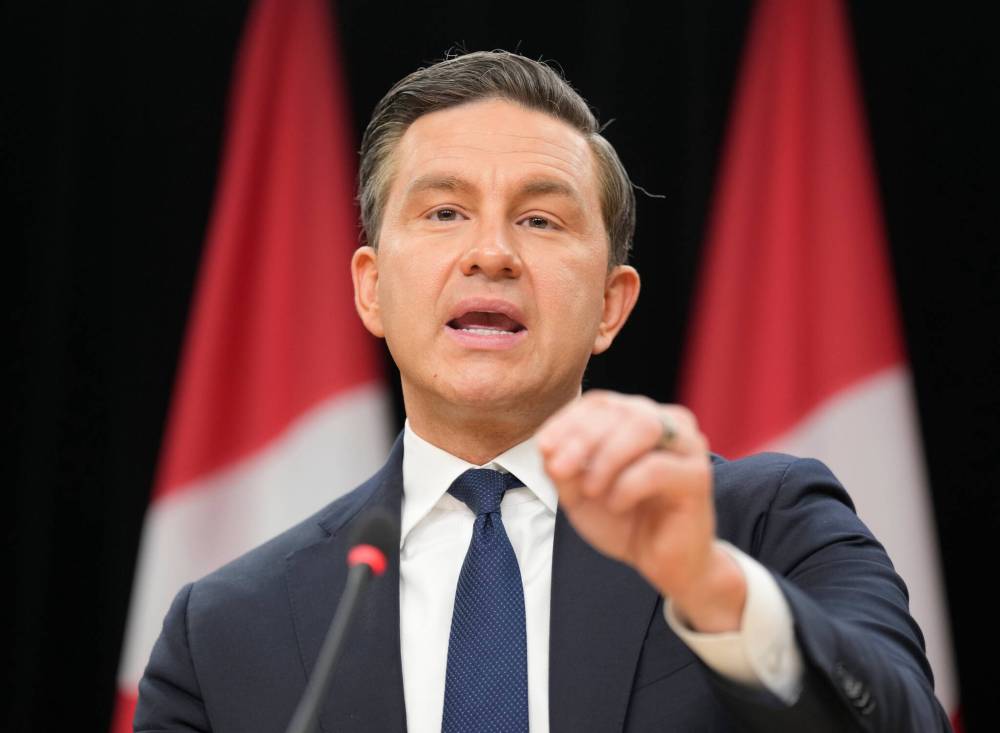
For more than two years, Conservative Leader Pierre Poilievre has been delivering essentially the same argument to Canadians, Tom Brodbeck writes. (The Canadian Press files)
And Canadians appear to be tuning it out.
A Nanos Research poll released this week should be a wakeup call for Conservatives. It shows Carney remains the preferred prime minister of 56 per cent of Canadians, compared with only 18.4 per cent for Poilievre.
The Liberals also maintain a significant advantage in voting intentions, with 47.1 per cent support compared with 27.9 per cent for the Conservatives. The NDP sits at 12.7 per cent.
Those numbers are not simply a reflection of Carney’s political strengths. They also reflect the Conservatives’ failure to adjust their message after the last election.
For more than two years, Poilievre has been delivering essentially the same argument to Canadians: The country is broken, the government is failing, crime is out of control and only the Conservatives can fix it.
That message helped the party build a large and enthusiastic following when former prime minister Justin Trudeau was floundering and heading out the door. But political messages are not permanent assets. They have to evolve as circumstances change.
The public conversation has changed. The Conservatives haven’t.
Even Conservative strategist Jamie Ellerton acknowledged this week that the party has not significantly changed its message since the election. That’s a remarkable admission, because the first responsibility of any political party after a defeat is to figure out why voters didn’t choose it and what needs to be different.
Instead, the Conservatives appear to have decided they simply need to keep saying the same things and wait for Canadians to eventually agree.
That’s not how politics works.
The clearest example is the party’s continued emphasis on crime.
Conservatives have spent years making public safety a central part of their political identity. There is nothing wrong with raising concerns about crime, repeat offenders or the justice system (especially in Manitoba, which has some of the highest violent crime rates in the country). Those issues matter.
But voters decide elections based on the problems they consider most urgent.
And the latest Nanos polling shows crime, nationally, is not at the top of that list. In fact, it’s at the very bottom.
Jobs and the economy remain Canadians’ biggest concerns.
That should not be surprising. People are worried about their paycheques. They’re worried about the cost of living. They’re worried about economic uncertainty caused by U.S President Donald Trump’s unpredictable approach to trade and his unwinnable war in Iran, which is wreaking havoc with the global economy.
They are not primarily looking for another speech about bail reform or mandatory minimum sentencing.
They are looking for answers on how Canada will grow, create jobs and protect its economy.
That’s the conversation Mark Carney has been having.
Carney has spent his first year in office positioning himself as an economic manager during a period of extraordinary uncertainty. He has travelled internationally to build trade relationships, attract investment and reduce Canada’s dependence on a single market.
Whether every initiative succeeds is something Canadians will judge later.
But politically, he has benefited from the perception that he is focused on the right issues.
As Nanos noted this week, Canadians are not particularly happy about the economy. Consumer confidence remains weak. People are still frustrated about affordability.
But they are not blaming Carney for those problems.
That’s an important distinction.
Governments usually pay a political price when people are unhappy with the economy. Carney has largely avoided that because Canadians appear to believe he is dealing with difficult circumstances rather than creating them.
That goodwill will not last forever. Eventually, voters will demand results.
If affordability does not improve, if investment does not materialize or if the economy weakens, Carney will face the same political pressures that every government eventually faces.
But the Conservatives cannot simply wait for that moment.
They have to persuade Canadians that they offer something better. Right now, they are not doing that.
The party continues to talk about the issues it believes should matter most instead of the issues Canadians say matter most.
That is a dangerous habit for any opposition.
Political parties win by understanding the public mood, not by trying to lecture voters into changing it.
The latest Nanos poll is another reminder that Canadians have moved on to a different set of concerns.
The Conservatives are still fighting the last battle.
Until Poilievre and his party find a way to change the conversation, they will continue struggling to explain why Canadians aren’t listening to them.
» Tom Brodbeck is a Winnipeg Free Press columnist.