
NEELIN VIEWS: Hextall looks back on early days
Advertisement
Read this article for free:
or
Already have an account? Log in here »
We need your support!
Local journalism needs your support!
As we navigate through unprecedented times, our journalists are working harder than ever to bring you the latest local updates to keep you safe and informed.
Now, more than ever, we need your support.
Starting at $15.99 plus taxes every four weeks you can access your Brandon Sun online and full access to all content as it appears on our website.
Subscribe Nowor call circulation directly at (204) 727-0527.
Your pledge helps to ensure we provide the news that matters most to your community!
To continue reading, please subscribe:
Add Brandon Sun access to your Free Press subscription for only an additional
$1 for the first 4 weeks*
- Enjoy unlimited reading on brandonsun.com
- Read the Brandon Sun E-Edition, our digital replica newspaper
*Your next Free Press subscription payment will increase by $1.00 and you will be charged $20.95 plus GST for four weeks. After four weeks, your payment will increase to $24.95 plus GST every four weeks.
Read unlimited articles for free today:
or
Already have an account? Log in here »
Hey there, time traveller!
This article was published 03/05/2022 (1605 days ago), so information in it may no longer be current.
Ron Hextall needs no introduction to local hockey fans.
He played as a goaltender for a total of 13 seasons in the National Hockey League and is currently the general manager for the Pittsburgh Penguins.
Hextall is the NHL career record holder for the most goalie penalty minutes, and he also became the first goalie in NHL history to score a goal by shooting the puck.

Hextall was born 58 years ago today, on May 3, 1964, in Brandon and attended both Earl Oxford Elementary and Neelin High School. He played for the Brandon Wheat Kings for three seasons and was eventually named to the Wheat Kings’ All-Time Dream Team.
We reached the Wheat Kings and Philadelphia Flyers legend at his office in Pittsburgh to revisit his great hockey career and his days growing up in Brandon.
Q: We’re reaching you on the 40th anniversary of your turning 18 as a member of the Brandon Wheat Kings, but first let’s start right back at the beginning: What was it like growing up in Brandon?
RH: I love Brandon. It was home. I started playing hockey there. I still have some friends there. I don’t get back there as often as I’d like, but Brandon, to me, was a very nice size town where there was a lot to do. But it wasn’t too big as well. And you know, we lived in the city. And then we lived outside the city for a few years. And my teen years, four, five years, we lived five miles outside of town, but played hockey, went to school, Earl Oxford at that time. And I’ve got an awful lot of fond memories growing up in Brandon.
Q: And you also attended Neelin, correct?
RH: I went there one full year and then, when I was 16, I went away [to play hockey]. But I was there for a for a full year. So yeah, I spent quite a bit of time in Neelin.
Q: You’ve mentioned memories of hunting and going to the lake when you were younger. How important was time in the outdoors as part of growing up here?
RH: It was huge, also at Westridge Community Centre, I spent a lot of time there. After school, the outdoor rink, being outdoors. My father was an outdoorsman and we spent pretty much all summer at Clear Lake. So we have a lot of fun memories of growing up on the lake and swimming in the lake, fishing in the lake. I also played baseball in Brandon. It was a good spot for us. My mother spent a lot of her time growing up in Brandon, and my dad went there to play for the Wheat Kings and pretty much stayed.
Q: You mentioned it a little bit already, but growing up it seemed like you were destined to become a hockey player. Did you play any other sports?
RH: I played baseball, I think, until I was 12 years old, and then all the sports that of course you played in elementary and middle school there, but mostly hockey and baseball. I played typically shortstop and I would pitch as well.
Q: What led you to want to become a goaltender?
RH: I’m not sure. My parents told me when I was two and a half years old, I used to throw a sock up the stairs and make a save when it came down. I had the good fortune of growing up around my father, who played in the NHL, so I decided from a young age that is what I wanted to do with my life. And when you have that type of exposure to it, you kind of see the good, the bad and the ugly. I spent a lot of time in the locker rooms with my father, and again I decided from a young age that I wanted to play hockey. The whole goaltending thing, I have no idea. We don’t have any goaltenders in our family. Yeah, and all of a sudden, I wanted to be a goalie. Just a quick little story about my first year playing hockey. I was eight years old when I started playing organized hockey, and my father wanted me to not play goal because he said you need to learn how to skate and then you know if you still want to go [be a goaltender] and then once you learn how to skate you can play goal. Unbeknownst to me, of course, he had no plans for me to ever be a goalie, then about two months into that season, our goalie was sick and I went in the net. From that day on, I played goal. There was something that I wanted to do. Like I said when I was two or three years old. So I can’t even recall why, why on God’s green Earth I wanted to be a goalie. But it was at a young age.
Q: Were there any prominent factors that led to your revolutionary puck-handling style of goaltending, or did it just kind of happen organically?
RH: Yeah, it just sort of happened organically. It’s funny to think that you recall things like when I was a young child watching the Penguins practice. When my dad was playing there, I do recall [Penguins goaltender] Jimmy Rutherford shooting the puck at the boards and it hit the boards about two feet off the ice and I thought it was the coolest thing at the time. So I’ve got a little recollection like that. I just sort of spent a lot of time on outdoor rinks by myself with the players stickhandling the puck. I’ve spent a lot of time playing road hockey, so I think, you know, over time [I] just developed this skill. When I first made the NHL, [Flyers coach] Mike Keenan really encouraged me to use that as part of our penalty kill. So it’s just something I can’t necessarily put a finger on. It just sort of happened organically.
Q: Where there any like specific players that you looked up to when you were growing up?
RH: Well, Jimmy Rutherford. I mean, my dad was first, obviously. You know, your dad is your dad and I still look up to him to this day. He was the number one guy. But in terms of goal, Jimmy Rutherford was a big one. Jimmy was really good to me when I was a young child. He played road hockey with my brother and me. He gave me one of his masks. He gave me his skates. He was talking to me when I was in the locker room. So, Jimmy is I guess my biggest idol growing up and then, you know, there were other guys like Tony Esposito, who I never met when I was a young child, but certainly was one [I looked up to].
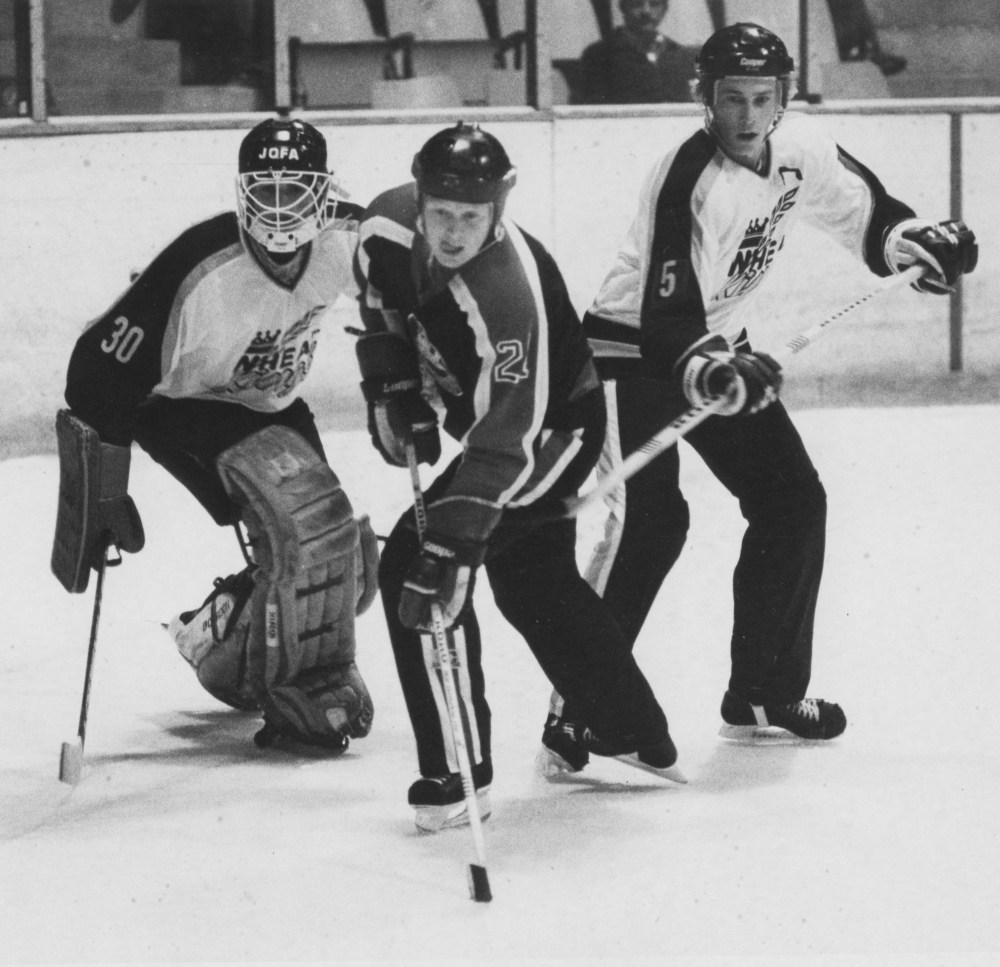
Q: Prior to joining to the Brandon Wheat Kings, you played a year for the Melville Millionaires and played one game in which you faced over 100 shots. Do you have any memories of that game?
RH: I do. We lost 21-2 and I think I was our player of the game and it was the hardest game I ever played for sure. I think I’ve got three goals in the first [period] and six and the second and 12 in the third. By the third period, it was hard to get up after you made the save. [The players] had to help me get undressed after the game. I wasn’t speaking. And it took a lot out of me, but I think if I look back in my development years, that was one of the key development years too, you know, and part of the success that I was able to have by making the NHL. I think if I didn’t have a 16-year-old year as difficult as it was, it teaches you to fight through things, battle through adversity, battle through negative thoughts. I look back on that whole entire year and look at that such a positive experience personally for development.
Q: Can you describe the feeling for a hometown kid to pull on a Brandon Wheat Kings jersey for the first time?
RH: Yeah, that was such a thrill. It’s funny when you grow up in a city like Brandon. I mean, I never thought so much about the NHL as I did on playing for the Brandon Wheat Kings. Even when I was 12, 13, 14 years old, playing minor hockey in Brandon, I used to sell programs at the weekend games when [Bill] Derlago and [Laurie] Boschman and [Ray] Allison, Brian Propp, [Brad] McCrimmon, Glen Hanlon were all playing. They were the best team in the Western Hockey League, so it was a real thrill for me as an education just watching all the games, selling programs, and then the thrill actually to pull on the jersey. It was huge for me.
Q: And then what was the feeling for that same hometown kid to be named to the Wheat Kings All Time Dream Team?
RH: Yeah, that was pretty special, too. I got a call on that and that was very special again, coming from Brandon. You know, one of my best friends growing up was Cam Plante, and he was a Wheatie as well. And to grow up in Brandon and to play for the Wheat Kings is a huge thrill and obviously being named to that team was a thrill many years later.
Q: What are your memories of Dec. 8, 1987 and becoming the first NHL goaltender to score by shooting the puck?
RH: Yeah, I’ve got very fond memories of that night. First of all, every time I got the puck, the fans in Philly would be chanting, “Shoot, shoot, shoot!” And my teammates would even, you know, like after the game, they would say to me, “You actually should have tried to score there.” So they were, they were pulling for me. And quite honestly, I think it meant more to other people than it did to me. I know when I did score, our whole team came off the bench, we actually got a minor penalty for delay of the game. And just hearing my teammates, how happy they were and stuff. The organization got us all a plaque and bronzed the plaque of the game sheet. They made a pretty special moment out of it and just the way my teammates reacted when I scored. I’ll never forget that feeling.
Q: They also gave you a car, too. Do you still have it?
RH: [laughs] Actually, my wife drove it around Philly there for a while and then she started getting honked at at every red light. So she said, “I need a new vehicle.” But we still have that car, in our garage, in storage.
Q: You’ve received many awards over the course of your career. What do you feel has been your greatest accomplishment?
RH: When you play in the NHL, there’s not a day that went by that I didn’t feel honoured to play in the NHL, and now that I’m an executive, I feel the same way. I think every day is an honour. And I think when I think back to my teammates, some of my work colleagues, I think that the biggest accomplishment is just plain playing on a team and being a member of a team and that special feeling when you win a big game. We had a really good run in 1986-87 and lost to Edmonton in the finals in Game 7. But I think about those teammates and that special run and everything that every player and every coach and every trainer put into that run. I think you think back to memories like that. And those are the special things you remember when you’re done.
Q: Over the course of your playing career, you were known as a fierce competitor. How does that tenacity translate into the front office?
RH: Well, I think you know, as an executive, you’d have to work hard and some of the tenacity that you have on the ice, you kind of have to let go of a little bit because you’ve got to be well thought out in the position I’m in now and not make rash decisions like you have to as a player. I think just the work ethic. But I think just to be able to work in your passion, like I’ve been able to do my whole life in hockey, is a thrill.
Q: What would you say is the most essential element for a sports franchise to be successful?
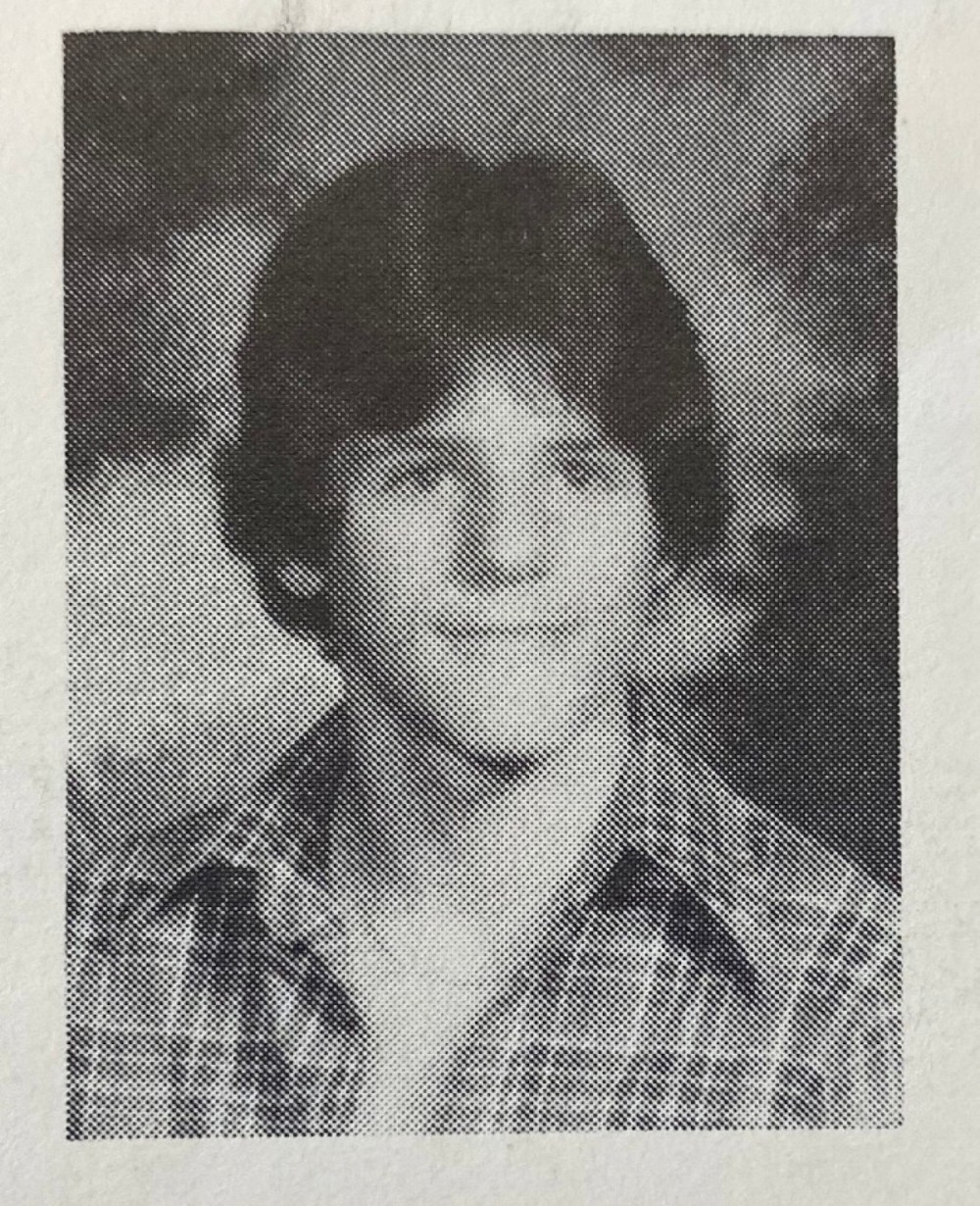
RH: I think it’s a word that’s used a lot, but I think it’s culture. It’s very hard to define, but you just feel it and you know if you have that winning culture and your players believing that winning culture, they fit into it and it’s not easy to get. You know there’s 32 teams in the league now and it’s very hard to win. But I think culture is the one thing that makes franchises successful.
Q: From a player’s perspective, what makes a great coach?
RH: Yeah, that’s a good question. Very good question. First of all, you’re in the highest leadership position on the team. I think a great coach not only coaches a team, but he coaches individuals to be the best that they can be, and I think every individual doesn’t respond to the same thing. I think the hardest part of coaching, the most challenging part, is managing individuals and collectively getting the most out of them as a team. I think the best coaches push the right buttons, treat the players so the right way to get the most out of them.
Q: If an 18-year-old Ron Hextall came into your office today, what lessons would you try and instil in that young man?
RH: I would try and instil the power of the mind. It’s a very powerful tool and I wish I knew when I was 18 years old. We train our bodies, and we train on the ice. But we don’t train our minds. So that’s the one. The one area where I wish I knew when I was younger. The benefits that you can reap from positive thinking and visualizing and all the things that you can do with your mind because it can go the wrong way as well. I think that’s the thing having a sports psychologist, you know, back then it was a stigma. And I think now it’s a positive.
Q: The pro hockey world has recently lost two of its greatest all time goal scorers in Mike Bossy and Guy Lafleur. What are your memories of either playing against them or watching them or meeting them as people?
RH: Yeah, my memories of playing against them aren’t that great because they were such great scorers! But it was an honour when you look back and you see. I remember when we were growing up on Hockey Night in Canada, watching them and having everybody talk about [Lafleur’s] speed and his hair waving in the wind there, which is pretty cool. It’s amazing when you watch a guy on TV growing up in Brandon and then, all of a sudden, you’re on the same ice surface, it’s pretty cool. He certainly wasn’t what he was in the last three years as he was at the start of his career, but he was still a pretty effective player at the time and still had speed and just the aura around him. And Mike Bossy, he was in our division there with the Islanders and we had a lot of battles against them. And I just remember what Mike was like: No matter how he shot the puck, where he shot the puck, it had a chance of going in. He’s one of those guys that could have fanned on his shot [but] it would still have a good chance of going in the net. It’s just, you know, how do you describe it? His release was just lightning quick, and his shot was accurate. Certainly, he was a pro. He played hard and he just had a special touch around the net.
Q: Thank you for that. I’ve got one more question for you, but first I want to say thank you so much for giving your time to us today.
RH: My pleasure. When I when I saw Brandon and Neelin High School, I thought, Oh yeah, I’ll do it. I mean, I get a lot of requests, obviously, but this was pretty special for me, so I’ve enjoyed it.
Q: Us too, thank you. OK, last question: I looked up the stat lines from your last two games as a pro. In your second-to-last game, you had two assists, and in your very last game, you had two penalty minutes. How much does that epitomize the career of Ron Hextall, NHL goaltender?
RH: [laughs] Well, you’re the first one that’s ever told me that. I was unaware of that. So yeah, I guess in a sense, it does. But Beth, you never saw me play. So I will say I never did deserve a penalty. I got a whole bunch, but I never did deserve one.
» Beth Wilson is a Grade 11 student at École secondaire Neelin High School.