
Canada’s Fleming uses ‘rewired’ brain to push for Olympic biathlon spot
Advertisement
Read this article for free:
or
Already have an account? Log in here »
We need your support!
Local journalism needs your support!
As we navigate through unprecedented times, our journalists are working harder than ever to bring you the latest local updates to keep you safe and informed.
Now, more than ever, we need your support.
Starting at $15.99 plus taxes every four weeks you can access your Brandon Sun online and full access to all content as it appears on our website.
Subscribe Nowor call circulation directly at (204) 727-0527.
Your pledge helps to ensure we provide the news that matters most to your community!
To continue reading, please subscribe:
Add Brandon Sun access to your Free Press subscription for only an additional
$1 for the first 4 weeks*
*Your next subscription payment will increase by $1.00 and you will be charged $20.00 plus GST for four weeks. After four weeks, your payment will increase to $24.00 plus GST every four weeks.
Read unlimited articles for free today:
or
Already have an account? Log in here »
Biathlete Jasper Fleming sees the world differently.
After being diagnosed with severe dyslexia around Grade 3, Fleming worked with a tutor to “rewire” his brain.
“I essentially learned to use my brain in a way that it just fits for me,” he said. “So the way that I learn, the way that I perceive the world, is totally unique to me.”
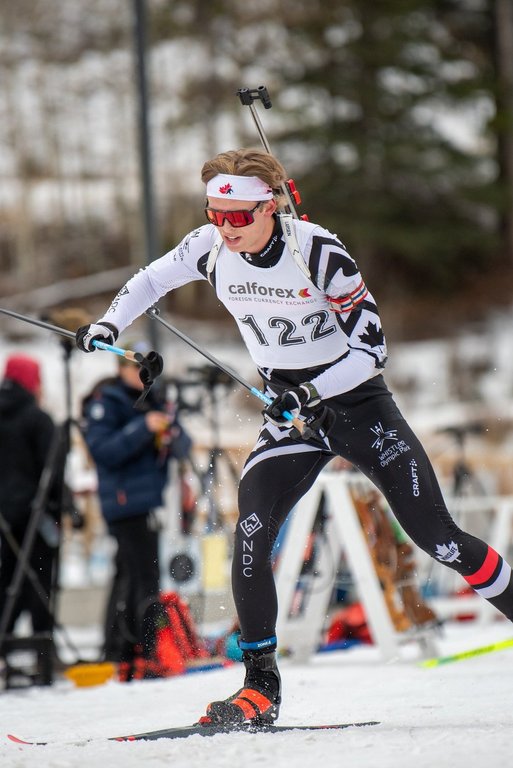
Now the 20-year-old Canadian is harnessing his unique approach as he competes on the biathlon World Cup tour and pushes for a spot in the 2026 Olympics.
Growing up in Edmonton, Fleming started cross-country skiing when he was seven and quickly fell in love. He moved first into skate skiing, then into biathlon, intrigued by the sport’s seeming juxtaposition.
“I wasn’t necessarily super into guns, but more just the aspect of (biathlon) being two sports that have nothing to do with each other at all,” he said. “And I thought you could put them together and all of a sudden make this event super interesting and creative.”
At school, though, Fleming struggled. Learning to read was something he just could not figure out.
“I was always kind of behind in school, but I had this knack, I guess, for storytelling, or this creative flair to me that didn’t seem to line up with where I was doing in school,” he explained.
Eventually, he was placed in a special program and a psychologist diagnosed him with severe dyslexia.
The news brought reassurance, Fleming said, and allowed his parents to find a tutoring program to help him.
“It was really formative and rewired my brain and allowed me to see things from a different perspective,” he said.
Fleming still uses the strategies he learned from his tutor today, both in his daily life and as a student in interdisciplinary studies at Capilano University’s branch in Squamish, B.C., where he now lives.
“Even the way I do math … they way I’m doing these operations is totally unique to me. They don’t seem, I guess, right to most people,” said Fleming, who plans to pursue a degree in microbiology. “And I get that there’s laws that you can’t bend, but the way that I’m able to work around them is something that I’ve come to accept is my own.”
The same drive that fuelled him as he learned to read is what Fleming credits as powering his athletic career.
“As a kid, developing those fundamental pathways of being determined and resilient, I would say, has carried over quite a lot to they way I exist as a person, but the way that I like compete as an athlete, too,” he said. “Just not wanting to give up and being able to see the bigger picture through it all.”
Last season, Fleming earned his first appearances on the World Cup circuit after what he described as “a heater of a weekend” at a selection camp in Canmore, Alta.
Seeing the top level of biathlon, where tens of thousands of spectators cheer wildly along the course, was a special experience.
“Even walking to the start line for my debut, I was crying a little bit like under my glasses,” he said. “Like, this is exactly what I’ve been wanting to do since I was seven years old. To see this kind of coming through melted away the fear of ‘I have to get a certain result.’”
Because he was still just 19 years old, Fleming opted to leave the World Cup early and focus on training for the world junior championships.
The race didn’t go as planned, with the young biathlete crashing, but Fleming was proud of the way he skied.
He’s taking that experience into this year’s World Cup tour, which begins Saturday in Oestersund, Sweden.
“I’m no longer showing up to these international races afraid of the competition. Rather, I feel like I’m part of the competition, that I can compete for these medals that Canada hasn’t got in so long,” Fleming said.
“If I win a medal this World Cup season, that would be freaking unreal. I would be elated with that. And I think that that’s maybe a pretty big stretch goal. But I think that I’m just there to, I guess, better myself for the next seasons.”
He’s also there to earn a spot on Canada’s Olympic team.
The country has four men’s spots in biathlon at the Milano Cortina Games, and Fleming knows he could nab one of them.
If he were to make the team, he’d be among the youngest athletes in the competition and doesn’t feel like there’d be much pressure to get on the podium. Just getting to the Games is the goal, he said.
“The fact that it’s possible is truly breathtaking,” Fleming said. “It’s really cool for me to be in this position, but it’s not the make it or break it, right? So if I don’t get to the Olympics this year, I will be my prime for the 2030 games in the Alps, be able to win medals.
“But this year, I’m just really grateful for being in a position where it’s possible.”
This report by The Canadian Press was first published Nov. 24, 2025.